Winter does not cause water damage on its own. It sets up the conditions for it. A pipe that survives a mild November can split during a hard freeze in January, and a roof that shed rain all fall can start letting water into the attic after the first heavy snow melts off it. Water Damage Restoration sees these patterns from coast to coast, and the homes that fare best are usually the ones where someone spent an hour on prep before the weather turned.
Climate matters here more than most people expect. A homeowner in the upper Midwest is fighting frozen supply lines and ice dams. Someone in the Southeast may be dealing with a cold rain that soaks a crawlspace for three days straight. Out West, a sudden atmospheric river can overwhelm drainage that never had to handle that much water. The checklist below is built to work across those differences, so take the parts that fit your climate and skip the rest.
Start Outside, Where Water Gets Its First Chance
Walk the perimeter of your home on a dry day and look at where water wants to go. Gutters full of leaves are the most common problem we see in late fall, and they are easy to fix. Clear them, then run water from a hose near the downspouts to confirm the flow actually leaves the property instead of pooling against the foundation.
Check that downspout extensions push water at least several feet from the house. In freezing climates, water that lands next to the foundation can freeze into a sheet of ice that later pushes against the wall. In warmer, wetter areas, the same water saturates the soil and pressure builds against basement walls. Either way, the fix is the same: move the water away before it has a reason to come inside.
Look at grading too. Soil should slope down and away from the foundation. If you see a low spot where water sits after rain, fill it with compacted soil now rather than waiting for a thaw to reveal the problem.
Roof, Attic, and the Ice Dam Problem
Ice dams are a winter issue almost everywhere snow falls. They form when heat escaping through the attic melts snow on the roof, the meltwater runs down to the cold eave, and it refreezes into a ridge. Water then backs up under shingles and finds its way into ceilings and insulation.
Before the first big snow, go into the attic with a flashlight. Look for damp insulation, dark staining on the underside of the roof decking, and frost on nails in cold weather. Any of those signs means warm air is leaking up and the roof is working harder than it should. Sealing gaps around light fixtures and attic hatches usually does more good than adding insulation on top of a leak.
- Check attic ventilation so cold air can move across the underside of the roof.
- Look for missing, cracked, or lifted shingles, especially on the north-facing slopes.
- Inspect flashing around chimneys, vents, and skylights for gaps or rust.
If you cannot safely reach the roof, use binoculars from the ground and note anything that looks out of place. Our crews are used to walking into a home after a storm and finding a leak that started weeks earlier from a single lifted shingle.
Plumbing and Supply Lines
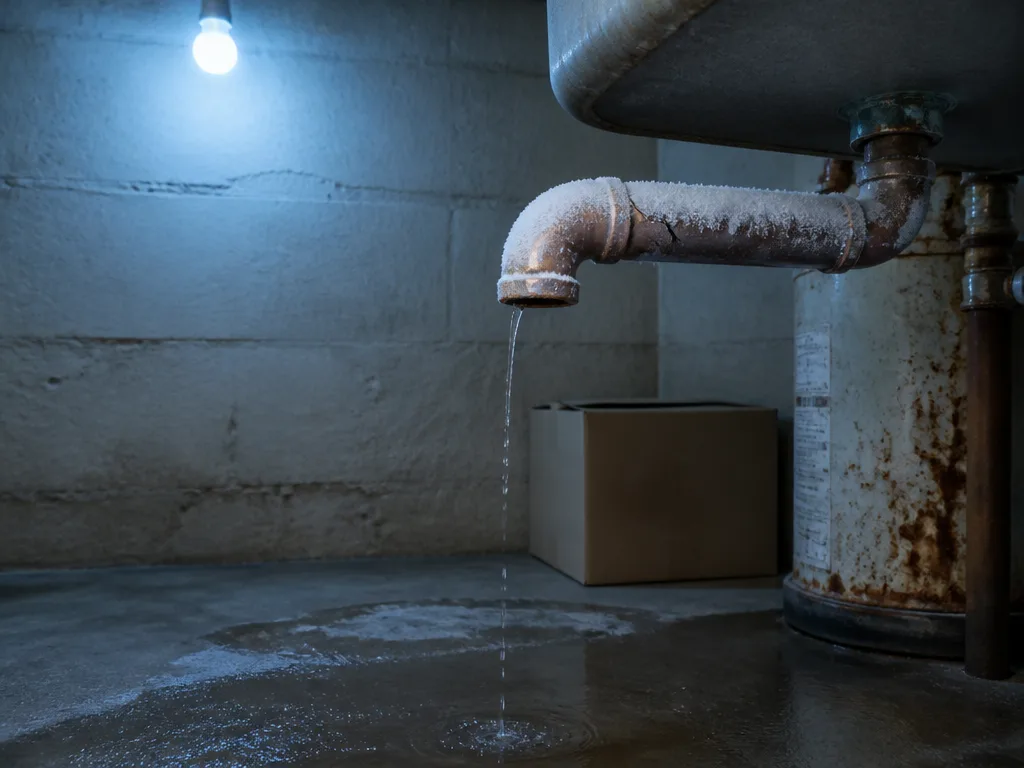
Frozen pipes cause some of the most expensive winter water losses we respond to. A supply line in an exterior wall or an unheated crawlspace can freeze overnight, then split when it thaws and pressure builds. The break may not show until you turn the water back on, and by then the damage has spread into flooring and drywall.
Find every pipe that runs through an unheated space, including garages, basements, and crawlspaces. Wrap them with foam insulation sleeves, and let faucets on exterior walls drip slightly during a hard freeze. Open cabinet doors under sinks on outside walls so warm room air can reach the pipes.
Know where your main shutoff valve is before you need it. Turn it once a year to make sure it moves freely. If a pipe does burst, shutting off the water within the first few minutes can keep a small leak from turning into a flooded room. Write the location on a card and tape it inside a cabinet door where everyone in the house can find it.
A Quick Winter Plumbing Test
On a cold morning, turn on a faucet on your coldest exterior wall and let it run to a slow, steady stream. If the flow weakens or stops, that line may be partly frozen. Shut off the water to that section if you can, and call a licensed plumber before thawing it with an open flame or high heat, which can damage the pipe and nearby materials.
Heating, Moisture, and Hidden Leaks Indoors
Winter homes are sealed tight, and that changes how moisture behaves. Showers, cooking, and drying laundry without venting add humidity that condenses on cold windows, rim joists, and the backs of closets. Over a season, that moisture can rot wood and feed mold before anyone notices a stain.
Run exhaust fans during and after showers. Keep indoor humidity somewhere around 30 to 50 percent, and use a cheap hygrometer to check it. Wipe condensation off windows each morning, and make sure furniture is not pushed flat against exterior walls where air cannot circulate.
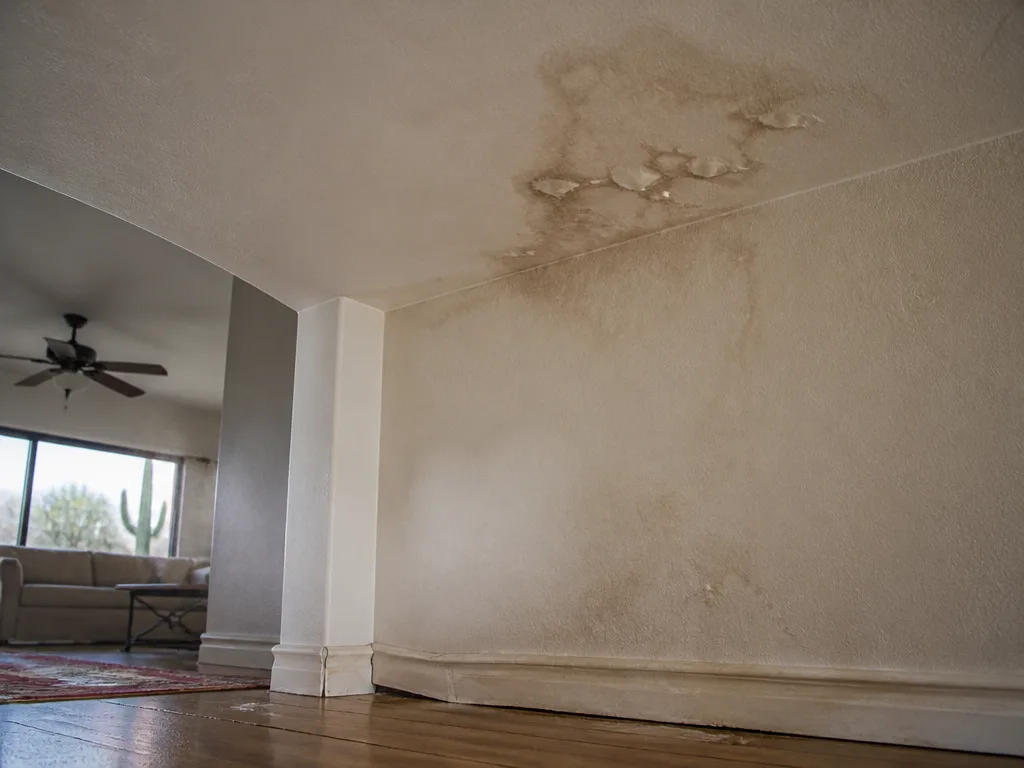
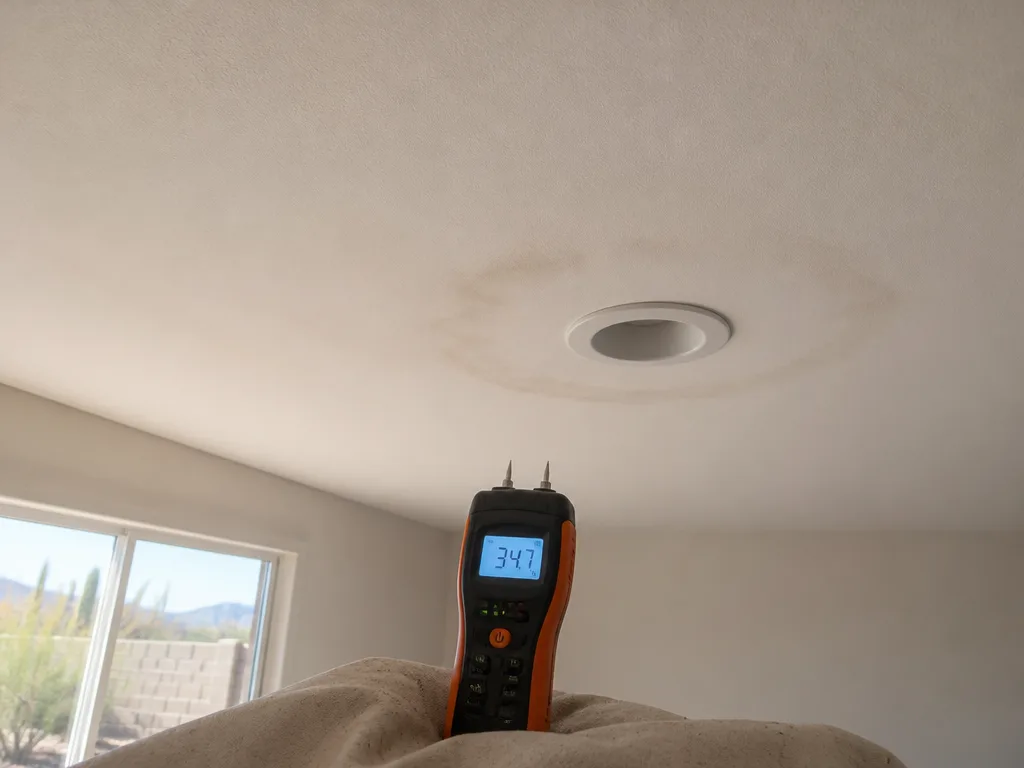
Walk your home once a month during the coldest stretch and check the places leaks hide. Look under sinks, behind the water heater, around the base of toilets, and along the ceiling corners of upper rooms. A soft floor, a warped baseboard, or a faint ring on a ceiling is usually the first sign of a problem that has been building for weeks.
When to Call a Restoration Specialist
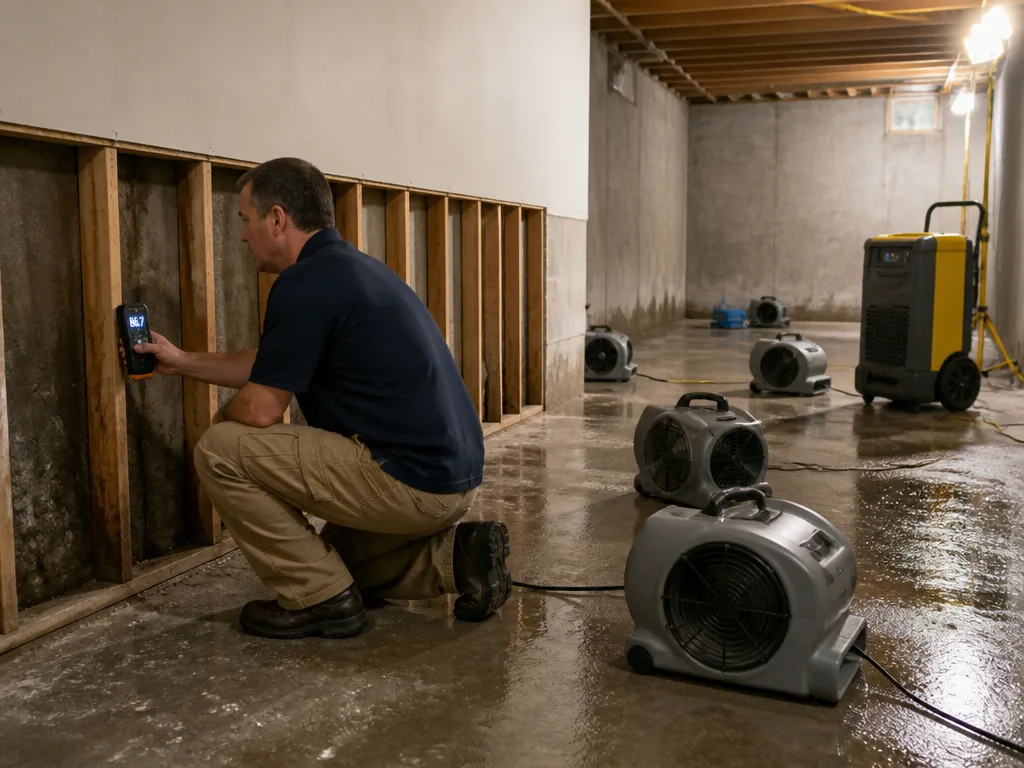
Some winter problems are small enough to handle yourself. A bucket under a drip and a towel on the floor buys time, but water that has soaked into subfloor, insulation, or wall cavities needs professional drying. Standing moisture in a closed house can start mold within a couple of days, which is why speed matters more than most homeowners expect.
If you find water you cannot trace, or if a ceiling sags, a wall feels cold and wet, or the smell of damp wood lingers after the leak is stopped, call a restoration specialist before you start tearing things out. Our team can measure moisture levels, find where water traveled, and set up drying equipment so materials are saved where possible. Call Water Damage Restoration to talk through what you are seeing. Our phone line is the way to reach us, and we will walk you through the next steps over the phone.
Winter is hard on every home, but the work you do in the weeks before the cold arrives tends to pay off all season. Pick two or three items from this list for this weekend, and save the rest for the next dry day.