Why water damage rarely announces itself
Most water damage doesn't show up as a flood. It shows up as a slightly darker patch on a ceiling you've looked at a hundred times, or a door that suddenly sticks in humid weather. By the time it looks like an obvious problem, water has usually been moving through the structure for days or weeks.
At Water Damage Restoration, our restoration specialists see the same pattern across the country, whether the house is a split-level in the Midwest or a older bungalow on the coast. The materials change. The warning signs mostly don't.
Below are the signs we see most often, and what each one usually points to. None of them proves the worst case by itself, but any of them is a good reason to get someone to look.
Signs you can see on walls and ceilings
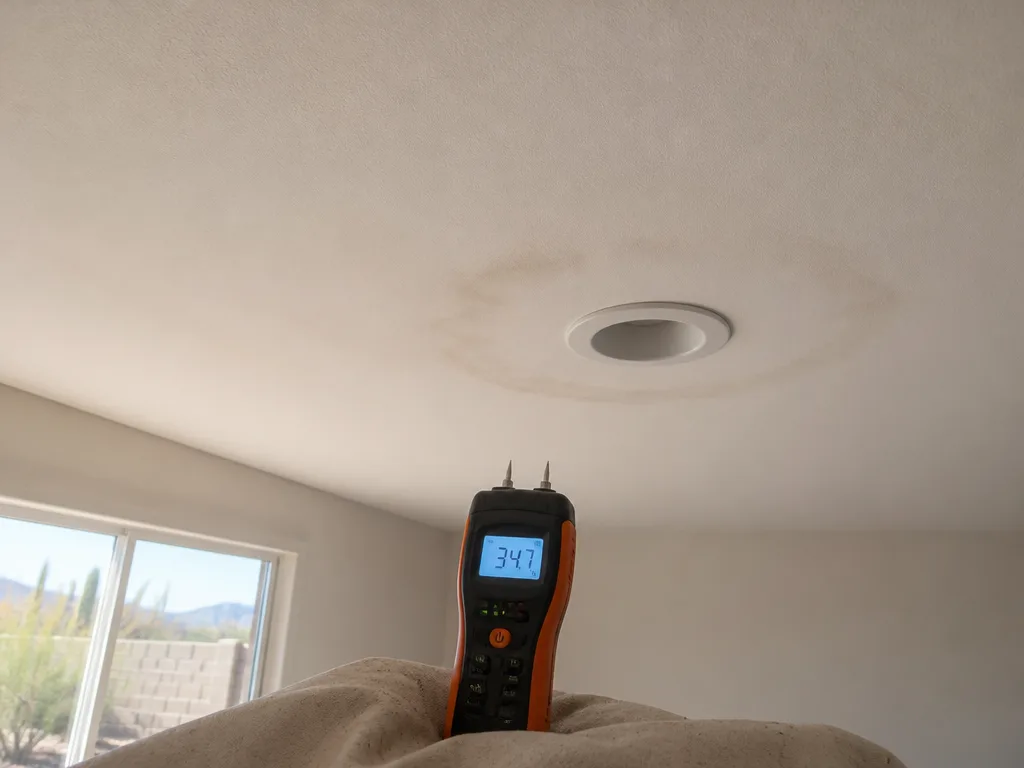
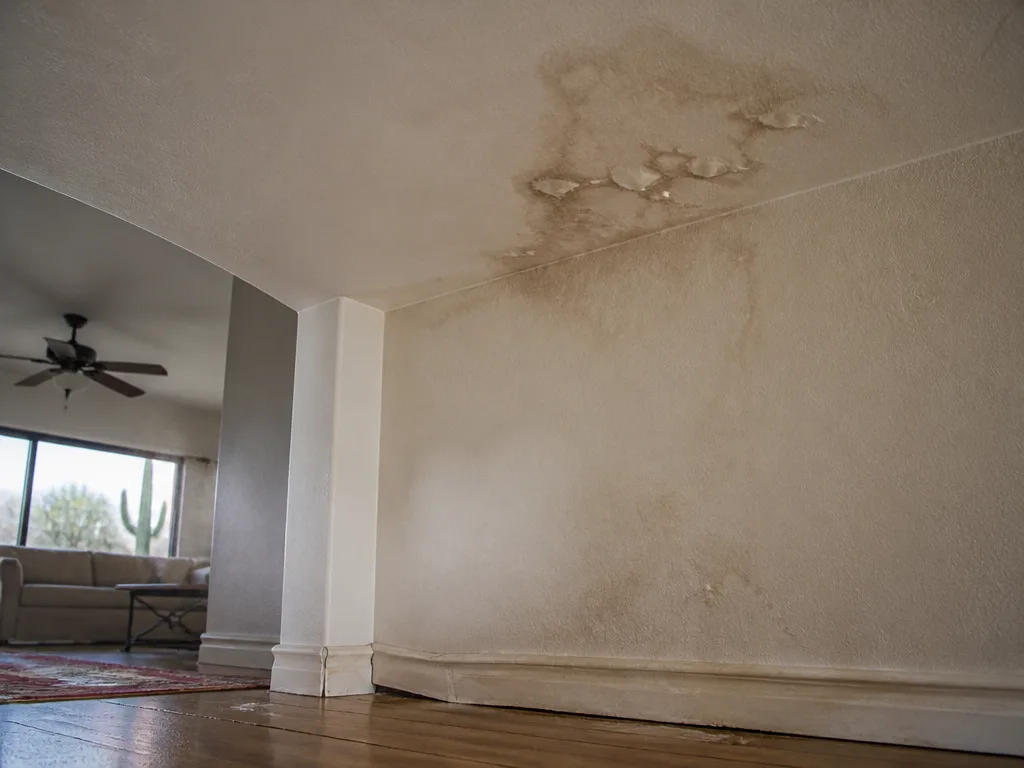
A yellow or brown ring on a ceiling is the classic one. Water travels along framing and then soaks down through drywall, so the stain often appears far from the actual source. A ring that gets bigger after rain usually means water is still getting in somewhere above it.
Bubbling or peeling paint is another. Paint that lifts in blisters often means moisture is pushing from behind the surface, not just sitting on it. Check the baseboards too. If paint is failing low on a wall, the source is often at floor level or in a crawlspace.
Wallpaper that feels loose at the seams, or drywall that feels soft when you press a thumb against it, is a sign the material has already taken on water. Don't poke a large area to test it. Just note where it is and call.
Signs that show up on floors and in the air
- Warped or cupped hardwood or laminate: Boards that lift at the edges usually mean moisture is coming up from below or sitting in the subfloor.
- Soft spots underfoot: A floor that gives a little when you walk across it is often rotting from the inside. This one should be treated as urgent.
- A persistent musty smell: That smell is mold or mildew working in a hidden space. It often comes from behind cabinets, under flooring, or inside wall cavities.
- Rising humidity or condensation on windows: A house that feels damp even with the air running may have moisture trapped in the structure.
The smell is the sign people most often ignore because it doesn't look like anything. If a room smells damp after the rest of the house has dried out, don't assume it will air out on its own.
Signs that point to a leak you can't see
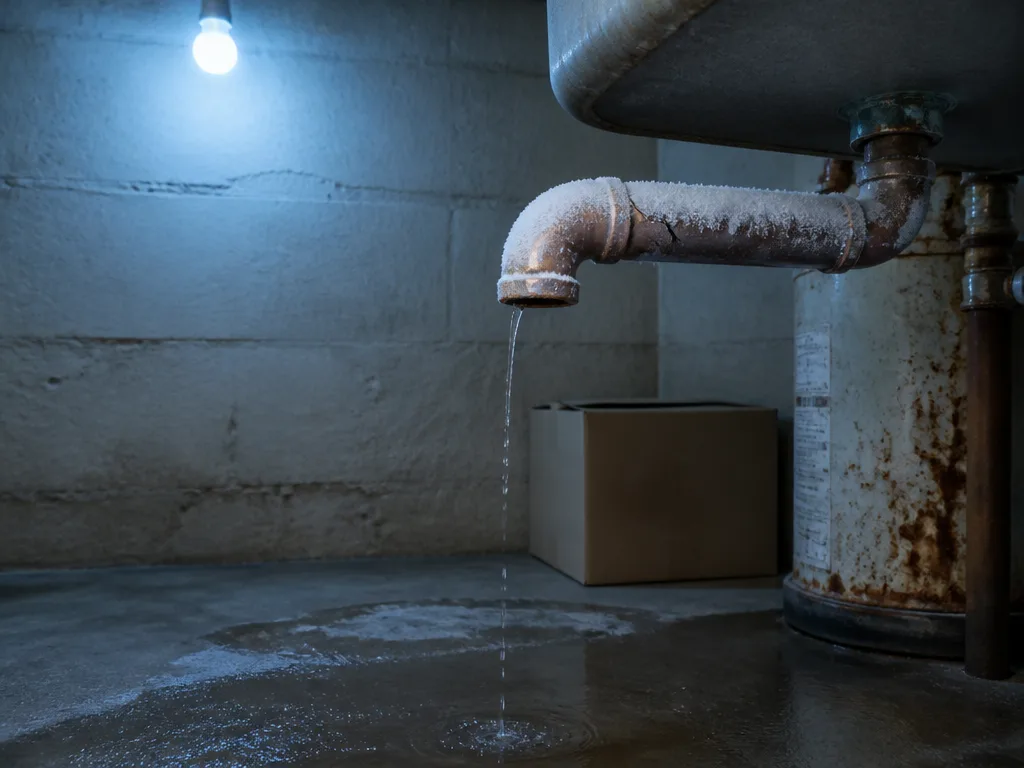
Water bills that climb without any change in use are one of the more reliable clues. A slow leak in a supply line or drain can run for months before it becomes visible, and the meter will show it before your eyes do.
Doors and cabinets that stop closing properly can mean the frame has swelled from moisture. Cracked or separating grout around tubs and showers can let water reach the subfloor. Mildew showing up in a closet or along an exterior wall is worth investigating, especially if it keeps coming back after cleaning.
Pay attention to the outdoors as well. Pooling water near the foundation, soil that stays soggy after dry weather, or a yard that always seems wet in one spot can all send water toward the structure.
What each sign usually points to
Ceiling stains and peeling paint usually mean a roof, flashing, or upstairs plumbing issue. Soft floors and warped boards usually mean water has reached the subfloor or framing. Musty odors usually mean hidden moisture has been present long enough for growth to start. Rising water bills usually mean an active leak somewhere in the system.
None of these is a diagnosis. Two signs in the same room often mean the problem is bigger than either one suggests, and the source is not always above or beside the damage.
What to do next
Start by photographing what you see, and note the date. If there is standing water, turn off power to affected areas where it is safe to do so, and avoid walking through water near outlets or switches. Move valuables and furniture away from wet spots if you can do it without risk.
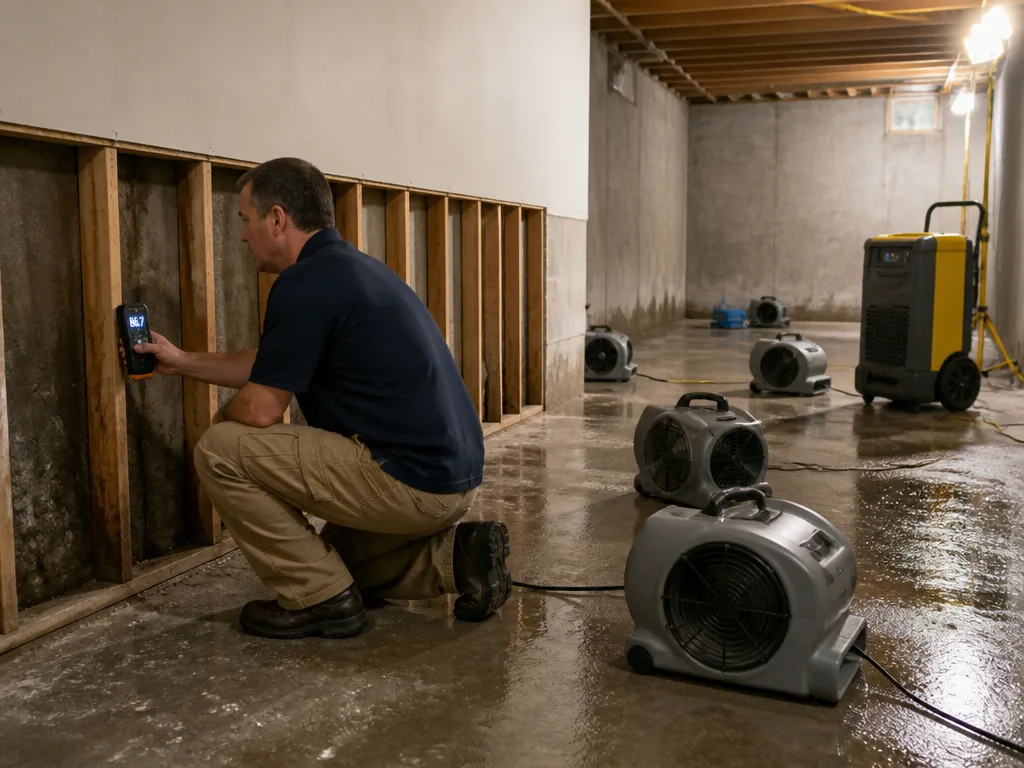
Then call Water Damage Restoration. Our team is available to talk through what you're seeing and help you figure out how quickly it needs attention. Local crews wherever you are can usually schedule visits within the same week, and the sooner moisture is found, the less material ends up coming out of the house.
Water damage is one of those problems that gets more expensive the longer it waits. If you've spotted any of the signs above, don't wait for them to get worse. Pick up the phone and get someone out there while the damage is still limited.