Structural Drying for Water-Damaged Walls and Floors
When water gets into a home or building, the visible damage is only part of the story. Moisture can travel deep into wall cavities, under flooring, and along framing, where it quietly weakens materials and invites mold if it is…
About structural drying
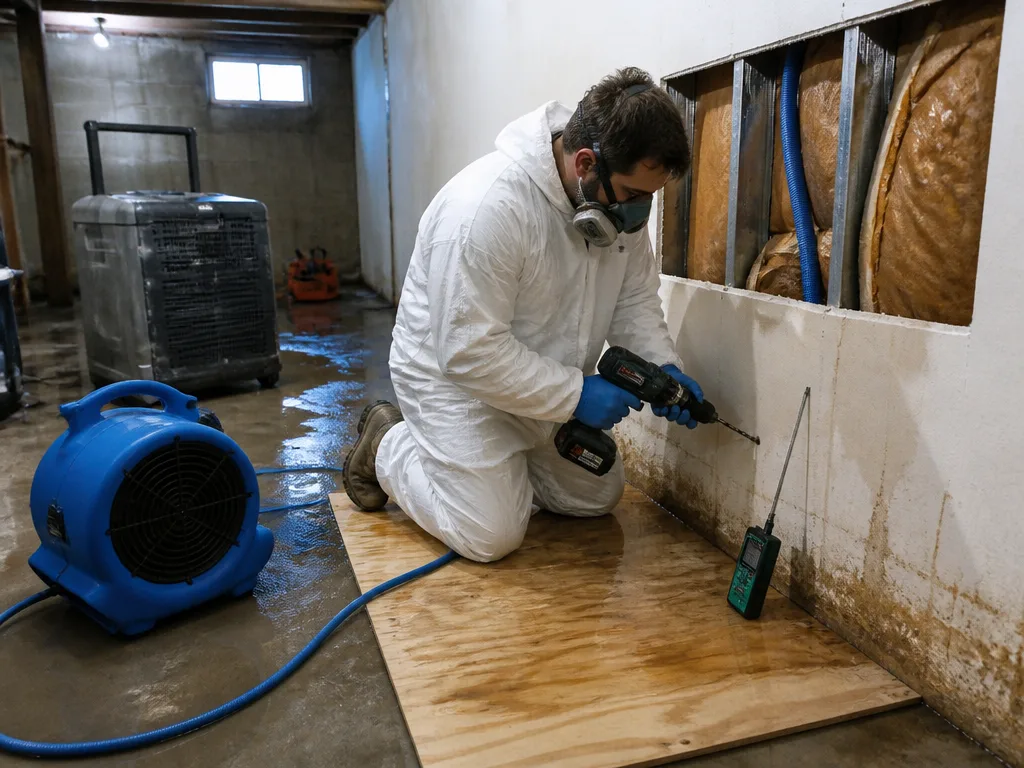
Structural drying is the phase of water damage restoration that focuses on the bones of the building rather than the surface finishes. Our restoration specialists open selected wall cavities and check subfloors, ceiling joists, and insulation for trapped moisture, then set up controlled airflow and dehumidification to bring those materials back to their normal dry range. The work includes daily moisture monitoring, documentation of readings for your records and insurance paperwork, and adjustments to equipment as conditions change. This service is well suited to homeowners, property managers, and commercial building owners who need a clear, measurable path from water intrusion to a dry, sound structure. Because drying must be finished before reconstruction, our team coordinates closely with the rebuilding contractor so that work moves forward on schedule. Across the United States, our crews work to keep the structure stable, limit secondary damage, and get your property back into use.
Signs you need structural drying
- Walls feel cool, soft, or damp to the touch days after a known water event.
- Baseboards or trim are warping, cupping, or pulling away from the wall surface.
- Flooring feels spongy underfoot or has begun to buckle near a water source.
- A musty odor persists in a room even after surface areas appear to have dried.
- Paint or wallpaper is bubbling, peeling, or showing dark stains from behind.
- Moisture readings in drywall or subfloor remain elevated after you dried the area yourself.
Why choose Water Damage Restoration?
- Our restoration specialists are trained to find hidden moisture inside walls and floors.
- We use moisture meters and thermal imaging to map exactly where drying is needed.
- Local crews wherever you are mean faster response when water damage is spreading.
- We document every reading so you can see progress from start to finish.
- We coordinate directly with rebuilding contractors to keep your project on schedule.
- Our national footprint lets us apply one consistent drying standard in every region we serve.
From phone call to finished job
Four straightforward steps. No upsells.
You tell us where the water came from, how long it sat, and which rooms are affected, so we can plan the right crew and equipment before we arrive.
Our restoration specialist walks the space with a moisture meter, checks walls and subfloors, and explains which materials can dry in place and which need to come out.
The crew pulls standing water, sets up air movers and dehumidifiers, and monitors moisture levels daily until the structure reads dry.
You receive a written summary of readings, equipment used, and any repairs recommended, and you can reach the team by phone for questions after the job.
What you get
Hidden moisture is removed from wall cavities before it can cause lasting rot.
Subfloors and framing are brought back to a dry, stable condition for rebuilding.
Daily moisture readings give you clear proof of when materials reach dry standard.
Early drying helps limit mold growth and reduces the scope of later repairs.
Your rebuilding contractor can start on time because the structure is confirmed dry.
Documented drying records support insurance claims and property management reporting.
Talk to a local pro now
(520) 593-0194Questions about structural drying
Don't see your question? Call (520) 593-0194 and we'll answer it.
How do you know when the structure is fully dry?
Our restoration specialists take daily moisture readings from walls, subfloors, and framing and compare them against dry standards for each material. We log every measurement and continue drying until readings return to normal range. You receive the documented results so you know exactly when the structure is ready for rebuilding.
Will you need to open up my walls to dry them?
In many cases we can dry wall cavities through small, targeted openings rather than removing large sections. Our restoration specialists use moisture mapping and thermal imaging to decide where access is truly needed. We aim to disturb only what is necessary so that repairs later remain as limited as possible.
How long does structural drying usually take?
Drying time depends on the materials involved, how deeply water penetrated, and the humidity and airflow conditions in the building. Many jobs take several days, while larger or more saturated structures can require longer. Our team gives you a realistic estimate after the initial assessment and updates you as daily readings come in.
Can drying start right away, and how quickly can your crew arrive?
Yes, speed matters because moisture spreads and can cause secondary damage within hours. Local crews wherever you are are dispatched as soon as you contact us, and our restoration specialists aim to begin mitigation promptly. Starting early helps protect the structure and can reduce the overall cost of restoration.
Do you work with my insurance company and rebuilding contractor?
We regularly provide documentation, moisture logs, and drying reports that insurance adjusters and contractors can review. Our team also communicates directly with your rebuilding contractor so they know when the structure is dry and ready. We work to keep the process clear and coordinated from drying through reconstruction.
Need structural drying today?
Real local restoration specialists. Careful work. One call away.