
Crawl Space Drying to Stop Rot Before It Spreads
Water has a way of finding the lowest point of your home, and the crawl space is often where it collects first. Moisture seeps up through bare soil, condenses on cold joists, and settles into insulation where you cannot see…
About crawl space drying
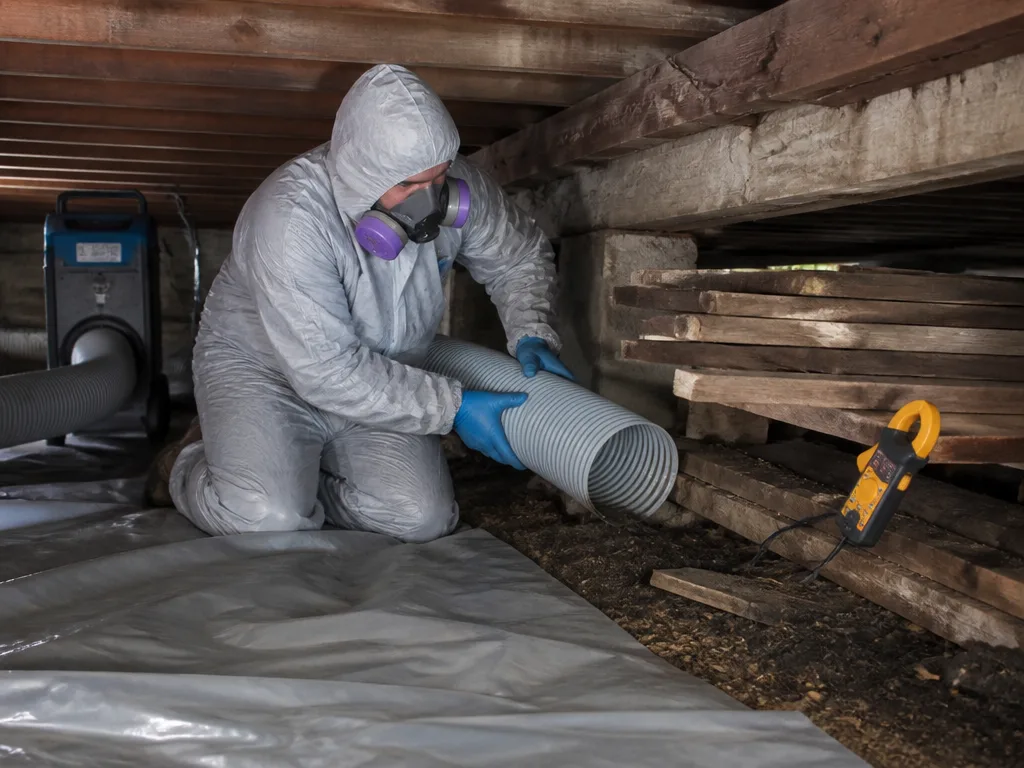
Crawl space drying covers far more than running a fan for an afternoon. Our restoration specialists assess moisture levels in the soil, the joists, the subfloor, and the insulation, then set up professional drying equipment sized to the actual conditions beneath your home. The work includes removing standing water where it exists, documenting moisture readings before and after drying, and confirming that wood has returned to a safe moisture content. When materials are too far gone to save, we say so plainly and explain the options. This service suits homeowners who have noticed a musty smell from vents, soft or bouncy floors, staining on framing, or water after a storm, and it also suits property managers and anyone who wants a verified dry crawl space before a sale or renovation. Because we operate nationwide, local crews can respond in your area quickly, reducing the window in which rot and mold can take hold.
Signs you need crawl space drying
- A persistent musty odor drifting up through floor registers or vents, even after cleaning.
- Floors that feel soft, spongy, or slightly sloped when you walk across certain rooms.
- Visible water stains, dark spotting, or warped wood on joists and support beams below the house.
- Insulation under the floor that is sagging, matted, discolored, or wet to the touch.
- Damp soil or pooled water in the crawl space after heavy rain or irrigation runs.
- Doors or windows that begin sticking or fail to latch as the framing shifts with moisture.
Why choose Water Damage Restoration?
- Our nationwide network of local crews means help can reach your area quickly when moisture strikes.
- Every project starts with a moisture assessment so drying decisions are based on measured data.
- Our restoration specialists are trained to work safely in tight, low-clearance crawl space environments.
- We document conditions before, during, and after drying so you can see exactly what was accomplished.
- We are upfront about what can be saved and what needs replacement, so you never face surprises.
- Our team focuses on the root cause of moisture, not only the visible damage, to help protect your investment.
From phone call to finished job
Four straightforward steps. No upsells.
You tell us where the water came from, how long it sat, and which rooms are affected, so we can plan the right crew and equipment before we arrive.
Our restoration specialist walks the space with a moisture meter, checks walls and subfloors, and explains which materials can dry in place and which need to come out.
The crew pulls standing water, sets up air movers and dehumidifiers, and monitors moisture levels daily until the structure reads dry.
You receive a written summary of readings, equipment used, and any repairs recommended, and you can reach the team by phone for questions after the job.
What you get
Wood framing and subfloors can dry back toward a stable moisture level, reducing the risk of structural decay.
Drying the space early helps limit mold growth that can spread into living areas above.
Clean, dry insulation performs better, which can help keep indoor temperatures more consistent.
Documented moisture readings give you clear proof of the work for insurers, buyers, or your own records.
Addressing the source of moisture can prevent repeated damage and costly repairs down the road.
A dry crawl space typically means fresher air and fewer odors circulating through your home.
Talk to a local pro now
(520) 593-0194Questions about crawl space drying
Don't see your question? Call (520) 593-0194 and we'll answer it.
How do I know if my crawl space needs drying or just ventilation?
A crawl space needs drying when moisture readings stay elevated, standing water or saturated soil is present, or wood and insulation show signs of wetness or decay. Ventilation alone may not remove moisture already stored in soil and framing. Our restoration specialists measure moisture levels and recommend the approach that matches what they find beneath your home.
How long does the crawl space drying process usually take?
Timing depends on the size of the crawl space, how saturated the soil and framing are, and the moisture source. Many projects take several days of equipment-supported drying, followed by verification readings. Your restoration specialist will give you an estimated timeline after the initial assessment and will confirm when materials reach safe moisture levels.
Will my insurance cover crawl space drying after water damage?
Coverage depends on your specific policy and the cause of the water, such as a sudden plumbing failure versus long-term seepage. We provide detailed documentation, moisture readings, and photos that many homeowners share with their insurers. We recommend contacting your insurance provider directly to confirm what your policy includes before work begins.
Can you fix the moisture source that caused the crawl space to get wet?
Drying addresses the water already present, and our team identifies where that water came from. Some sources, like a leaking supply line or a failed grading issue, may need repair by a licensed professional in your area. We will clearly explain what we found and what additional steps may help prevent the problem from returning.
What should I do before the restoration specialists arrive?
Keep the crawl space access clear, avoid entering standing water if you can, and turn off electricity to the area if water is near outlets or wiring. Take photos of any visible damage and note when you first noticed the problem. Having this information ready helps our team begin the assessment quickly and accurately.
Need crawl space drying today?
Real local restoration specialists. Careful work. One call away.