Every few weeks someone calls us after spotting a ceiling stain, and usually a neighbor has already explained what it means. Most of the advice floating around is half right at best. Here are the moisture detection myths we hear most often, and what the readings actually show.
Myth one: if the surface feels dry, the problem is over
Drywall and flooring can feel dry to the hand while the material underneath is still holding water. Surface moisture evaporates fast, especially in a warm room with a fan running. The wet part hides behind it, in the wall cavity or the subfloor.
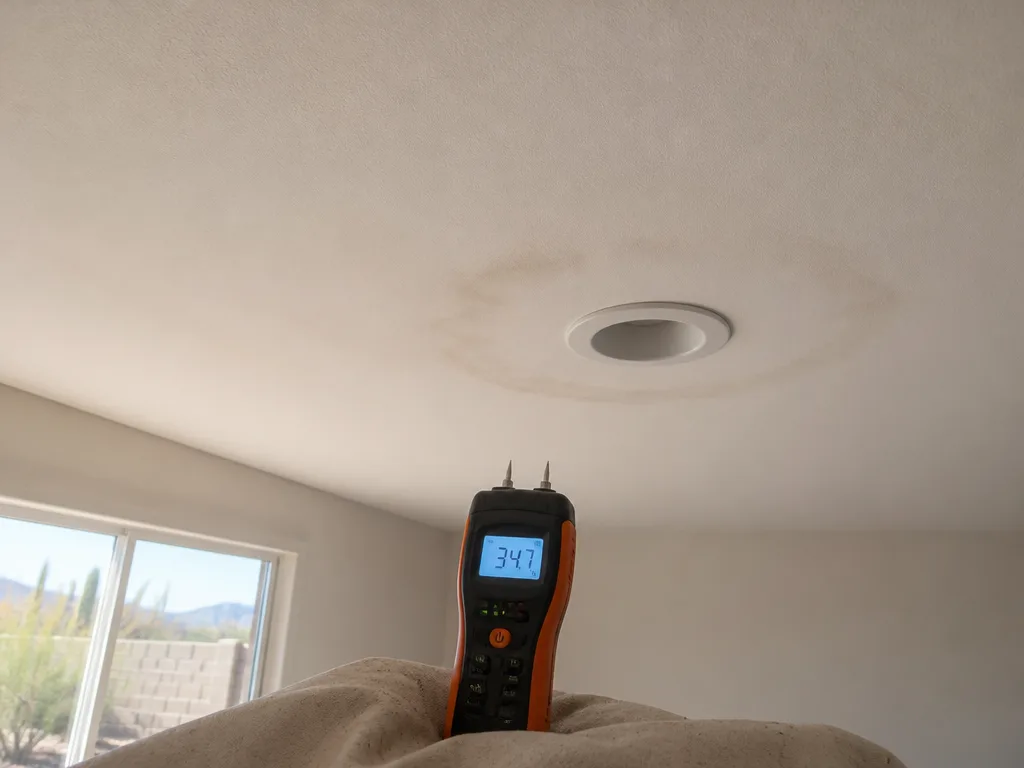
This is why our restoration specialists use meters that read below the surface rather than relying on touch. A pin meter reads resistance between two small probes pushed into the material. A pinless meter scans across the surface and picks up moisture a little deeper. Neither one is magic, but together they show you where the water actually traveled.
If you had a leak and the room still smells damp a week later, don't assume it dried on its own. Give us a call and we can talk through what to look for.
Myth two: a stain tells you how big the problem is
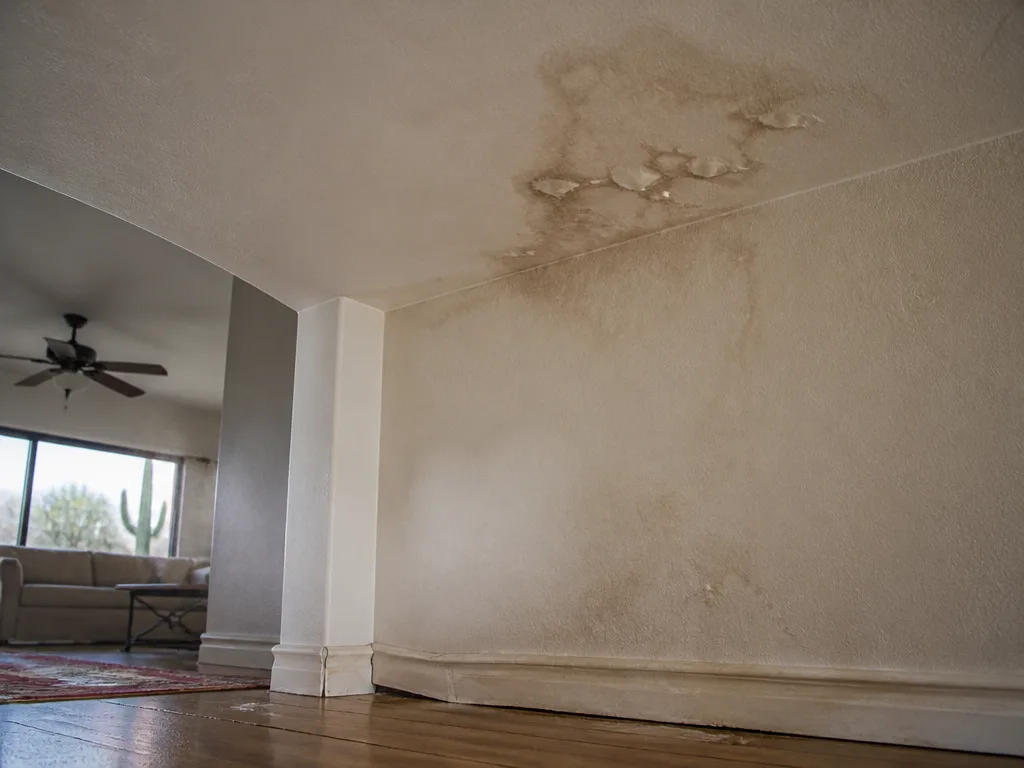
Stains are useful, but they mislead in both directions. A small brown ring on a ceiling can sit above a wide wet area that hasn't shown itself yet. Meanwhile a large, pale mark might be an old stain from a leak that was fixed years ago.
Water moves along joists, under tile, and through gaps the eye never reaches. It follows gravity and whatever path is easiest, so the damage often shows up several feet from where the water got in. A stain is a clue, not a measurement.
- Look for a stain that is darker at the edges. That usually means water was moving recently or is still moving.
- Press gently on baseboards and flooring near a wall. Soft spots are a red flag.
- Notice paint that bubbles or lifts in a patch that otherwise looks fine.
- Pay attention to musty smells that come and go with the weather.
Myth three: a fan and a dehumidifier are enough
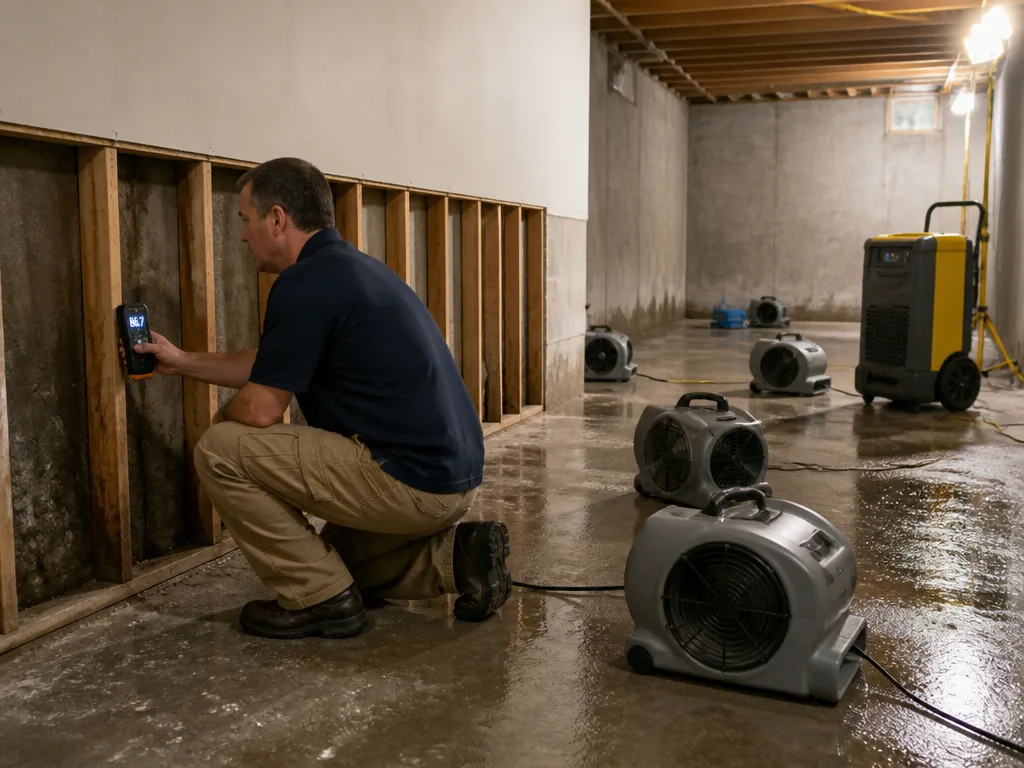
Fans and dehumidifiers do real work, and we use them on almost every job. But they only dry what they can reach. If moisture is trapped inside a wall or under a floor, air moving across the room never touches it.
What matters is the readings over time. Our crews log moisture levels at several points, then recheck them daily until the numbers return to a normal baseline for the materials and the room. Equipment gets moved based on what the readings show, not on how the room feels.
So if you are drying the space yourself, measure it. A basic moisture meter is a small tool compared to replacing a subfloor, and it tells you whether the drying is working or you are just moving air around.
Myth four: mold only shows up after weeks
Plenty of people believe they have a long window before mold becomes an issue. In reality, mold can start within a day or two when materials stay wet and the air stays humid. By the time you see it, growth may already be spreading into places you can't see.
That timeline is why drying speed matters more than most homeowners expect. Wet drywall and carpet padding can turn into a problem quickly. Removing standing water and getting air moving comes first, and checking readings comes right after.
If you notice an earthy smell or discoloration on the back of a wall or along the bottom of a cabinet, take it seriously even when the rest of the room looks clean.
Myth five: you have to tear everything out to find the water
Demolition is sometimes necessary, but it is not the first move. A lot of diagnosis can happen without opening every wall. Thermal imaging and moisture mapping can narrow down where the water is before anyone swings a hammer.
Our restoration specialists start with the least invasive checks. We open only what the readings and the building layout justify. That keeps your home in better shape and usually keeps the job focused, because the work follows the moisture instead of guesses about it.
There are cases where opening a wall is the right call, especially when water has been sitting for a long time. The point is that the decision should come from data you can see, not from a hunch.
What to do next
If you suspect water is somewhere it shouldn't be, stop the source if you can do it safely, then photograph what you see. Jot down when you first noticed it and which room it is in. Those details help when you talk with our team.
Water Damage Restoration has crews working across the United States, and we handle moisture detection the same careful way whether the home is a small condo or a large family house. Local crews wherever you are, and one phone call is all it takes to start the conversation.