Dehumidification Drying Service Nationwide
When water gets into a home or business, the damage often keeps spreading long after the visible puddles are gone. Moisture soaks into drywall, wicks up into insulation, and settles under flooring where no one can see it.
About dehumidification
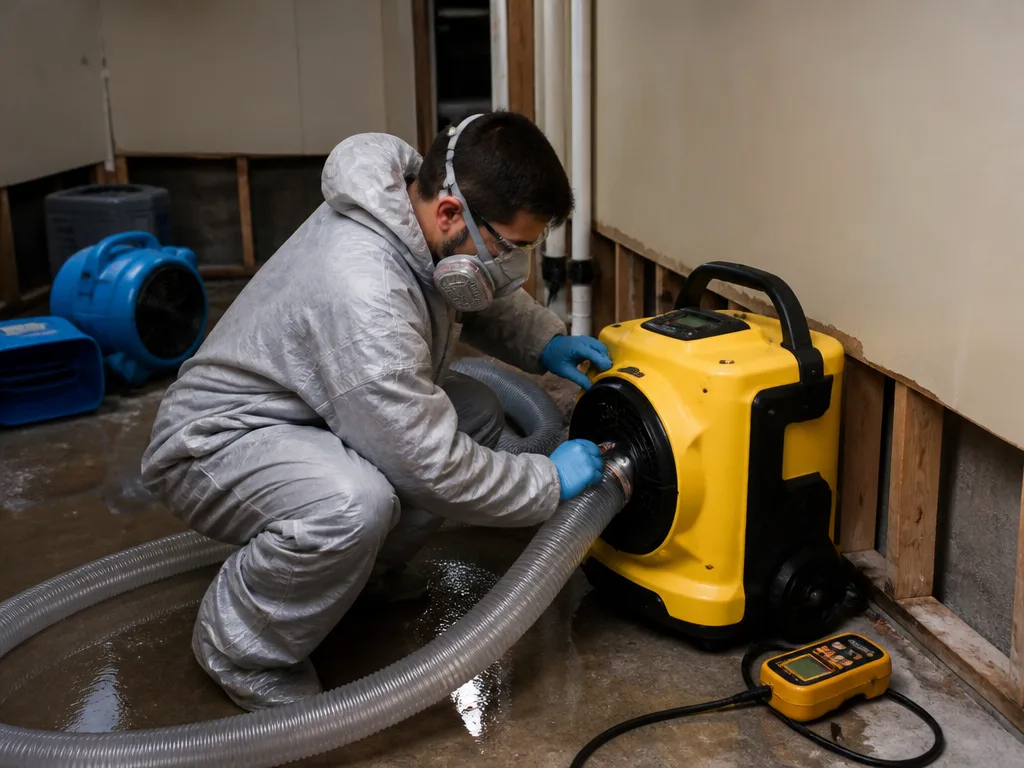
Dehumidification is one phase of a water damage restoration project, and it is the phase that determines whether a space truly recovers. Our crews measure moisture content in building materials before and during drying so that equipment placement is based on real readings rather than guesswork. Depending on the job, that can include air movers to increase evaporation, dehumidifiers to remove water vapor from the air, and monitoring tools that track progress day by day. We work with homeowners, property managers, and business owners who need a dependable drying plan and a clear timeline. This service is especially valuable for anyone dealing with a flooded basement, a leak inside a wall cavity, or water that reached a subfloor. Our restoration specialists document readings and conditions as the job progresses, so you have a written record of how the space was dried.
Signs you need dehumidification
- Musty or earthy odors that linger in a room even after the visible water has been cleaned up.
- Walls, baseboards, or trim that feel cool, soft, or spongy when you press on them after a leak.
- Warped or buckling hardwood, laminate, or subfloor boards that appeared days after the original water event.
- Visible condensation on windows or walls in a room that was recently flooded or leaked.
- Discoloration, staining, or dark spots on drywall or ceilings that grow over a few days.
- Persistent damp feeling in a crawlspace, basement, or lower level after rain or a plumbing failure.
Why choose Water Damage Restoration?
- Our restoration specialists use commercial-grade drying equipment sized to the actual affected area and materials.
- We respond quickly with local crews wherever you are across the United States, so drying can begin without long delays.
- Every job is monitored with moisture readings so drying decisions are based on measurable data.
- Our team explains the drying plan, expected timeline, and progress in plain language throughout the project.
- We document conditions and readings so you have a clear record for insurance and property management needs.
- Water Damage Restoration brings a national footprint with local crews who understand how to dry many different building types.
From phone call to finished job
Four straightforward steps. No upsells.
You tell us where the water came from, how long it sat, and which rooms are affected, so we can plan the right crew and equipment before we arrive.
Our restoration specialist walks the space with a moisture meter, checks walls and subfloors, and explains which materials can dry in place and which need to come out.
The crew pulls standing water, sets up air movers and dehumidifiers, and monitors moisture levels daily until the structure reads dry.
You receive a written summary of readings, equipment used, and any repairs recommended, and you can reach the team by phone for questions after the job.
What you get
Reduces the window of time that mold has to establish itself inside walls and under flooring.
Helps protect structural framing, subfloors, and building materials from long-term moisture damage.
Shortens the overall restoration timeline by drying the structure before rebuilding begins.
Gives you measurable moisture readings so you can confirm when the space is ready for repairs.
Limits the risk of secondary damage such as warping, staining, and odor that spreads through a building.
Helps you return to normal use of your home or business sooner with a documented drying process.
Talk to a local pro now
(520) 593-0194Questions about dehumidification
Don't see your question? Call (520) 593-0194 and we'll answer it.
What does dehumidification actually do during water damage restoration?
Dehumidification removes excess moisture from the air and from building materials so the space can dry. Our restoration specialists place commercial-grade units strategically and pair them with air movers to speed evaporation. Together, this pulls water out of walls, floors, and subfloors that would otherwise stay damp and invite mold growth.
How long does the drying process usually take?
Drying time depends on the type of water involved, how far it traveled, the materials affected, and the size of the space. Many jobs take several days, and some larger or deeper saturations take longer. Our team tracks moisture readings each day and gives you a clear estimate, then confirms when the structure reaches dry standards.
Will I need to leave my home while drying equipment is running?
In many cases, you can stay in the unaffected parts of your home while equipment runs. Our restoration specialists will explain which areas need to stay clear for safety and for drying efficiency. If the affected area is large or the work is extensive, we will discuss options with you before the job begins.
Is dehumidification the same as mold removal?
No, dehumidification is about drying the space so mold has less chance to establish itself. If mold is already visible or has grown, it may require separate remediation. Our team will assess the area, document conditions, and tell you clearly whether additional work is needed beyond drying.
How do I get started if water damage just happened?
Contact us as soon as possible, because quick response reduces the spread of moisture and secondary damage. Local crews are available nationwide, and our team will schedule a visit, assess the affected materials, and explain the drying plan. Prompt action is one of the most important steps you can take to protect your property.
Need dehumidification today?
Real local restoration specialists. Careful work. One call away.