
Water Damage Restoration
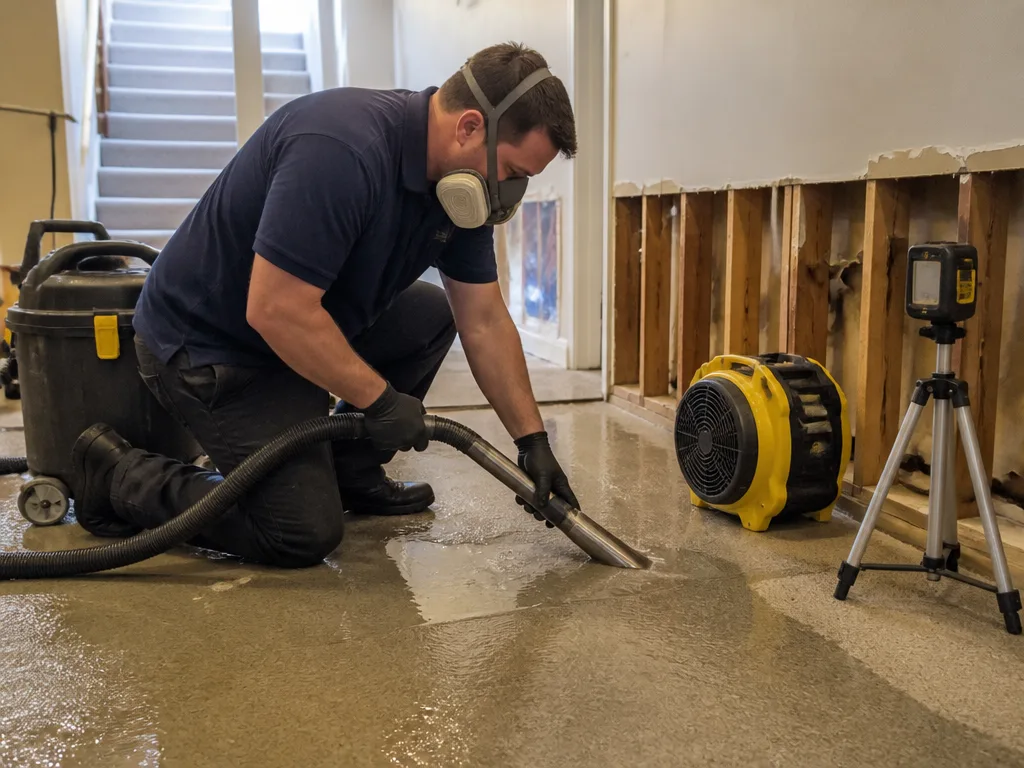
Standing water in your home? Our restoration specialists extract it and dry the structure so rooms feel usable again.
Cypress homes take a beating from storms and humidity, and a leak that drips through the ceiling can turn into a bigger problem fast. When water sits in drywall and insulation, it can sag, stain and grow mold before you notice much at all. Our restoration crew in Cypress dries out the affected area first, then rebuilds whatever can't be saved.
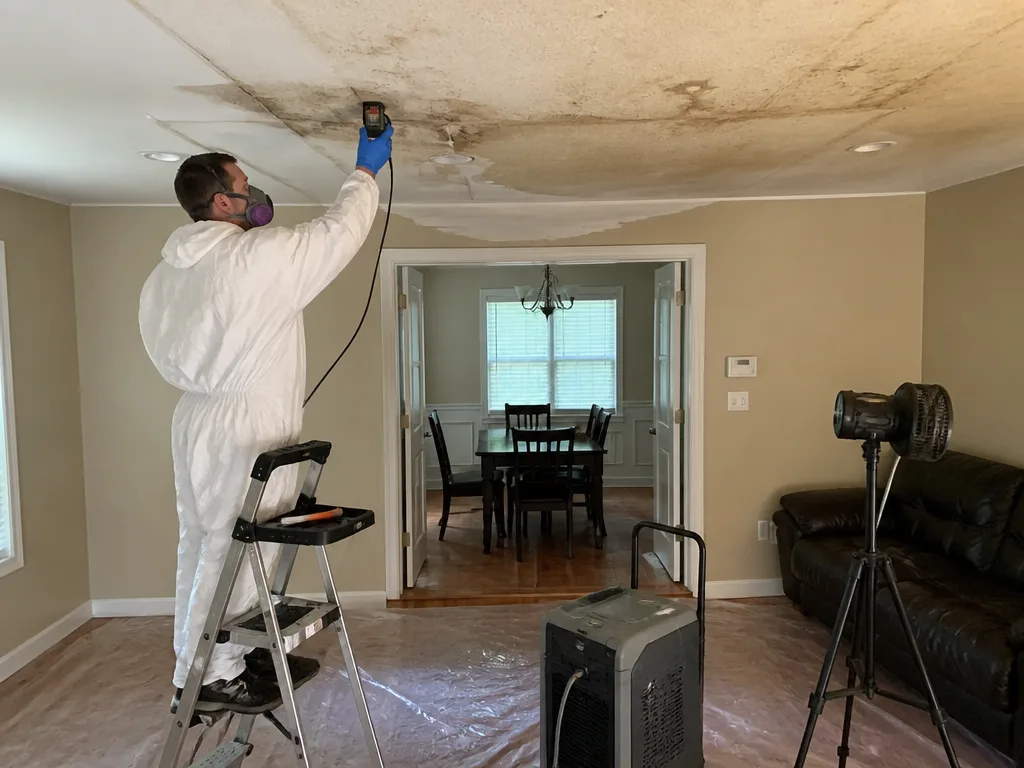
Ceiling water damage work in Cypress usually means opening up drywall, checking the joists and insulation above, and drying the framing before anything gets patched. Many homes here were built around 2011, so the materials and roof lines are fairly consistent, which helps us spot where water tracked in.
Our local team covers every ZIP code in Cypress for ceiling water damage.
If any of these sound familiar, a quick phone call will help you decide whether ceiling water damage is the right next step for your Cypress property.
Call (520) 593-0194Three straightforward steps. No upsells.
We check the roof, plumbing, or HVAC lines above the stain to find where the water is actually coming from. Fixing the stain without stopping the leak just means it comes back.
We pull out any sagging or soaked drywall, then run air movers and dehumidifiers until the framing and insulation read dry. We check for moisture before we close anything up.
We patch or replace the drywall, tape and texture to match the surrounding ceiling, and prime and paint so the repair blends in. The area is cleaned up before we leave.
Water can soak into attic insulation and drywall, then slowly work its way down to the surface. A stain appearing later often means moisture is still trapped above, so the area should be checked rather than just painted.
Yes, if the wet area is near ductwork or the attic air handler, moisture can reach those components. Many Cypress homes use natural gas or electric heat, so we look at both the ceiling and nearby equipment when we assess the damage.
A technician checks the stain, the ceiling material, and the area directly above it, usually with a moisture meter and sometimes a thermal camera. They look for the water source and tell you what they found. If the ceiling needs to come down, they'll show you which sections and why. You'll get a plain-language explanation before any work starts.
Drying usually takes a few days, and the rebuild and paint often add a few more, depending on how large the affected area is. Costs depend on the size of the damage, how far the water traveled, and whether the source has to be fixed first. Call us with a description of the stain and we'll give you a realistic timeline and let you know what to expect.
Standing water in your home? Our restoration specialists extract it and dry the structure so rooms feel usable again.

Standing water out of your home fast, so floors, drywall and belongings have a real chance to dry out.
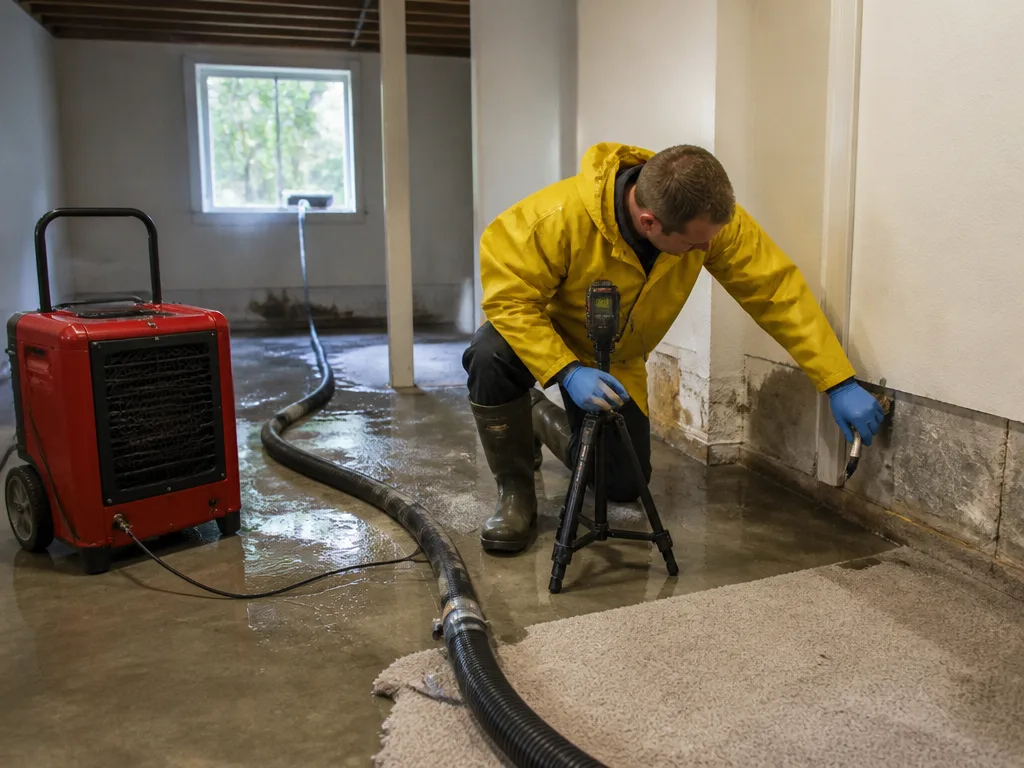
Standing water pumped out and floors dried so your home is livable again.
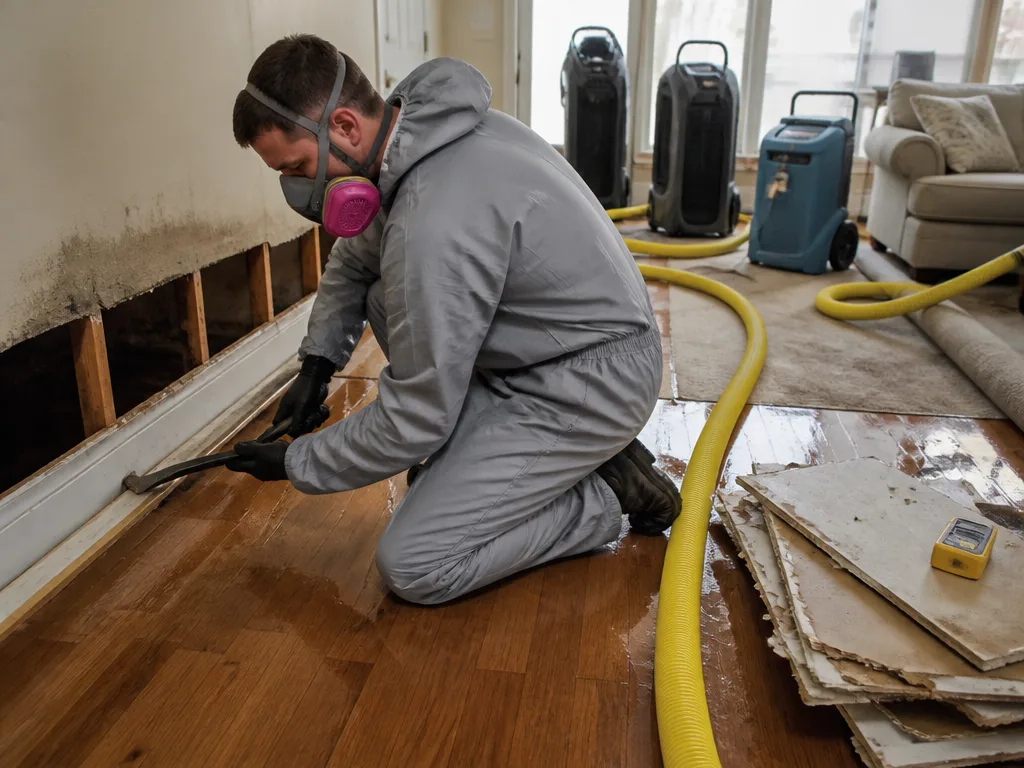
Fast flood cleanup and drying that gets water out of your home before it turns into mold and rot.
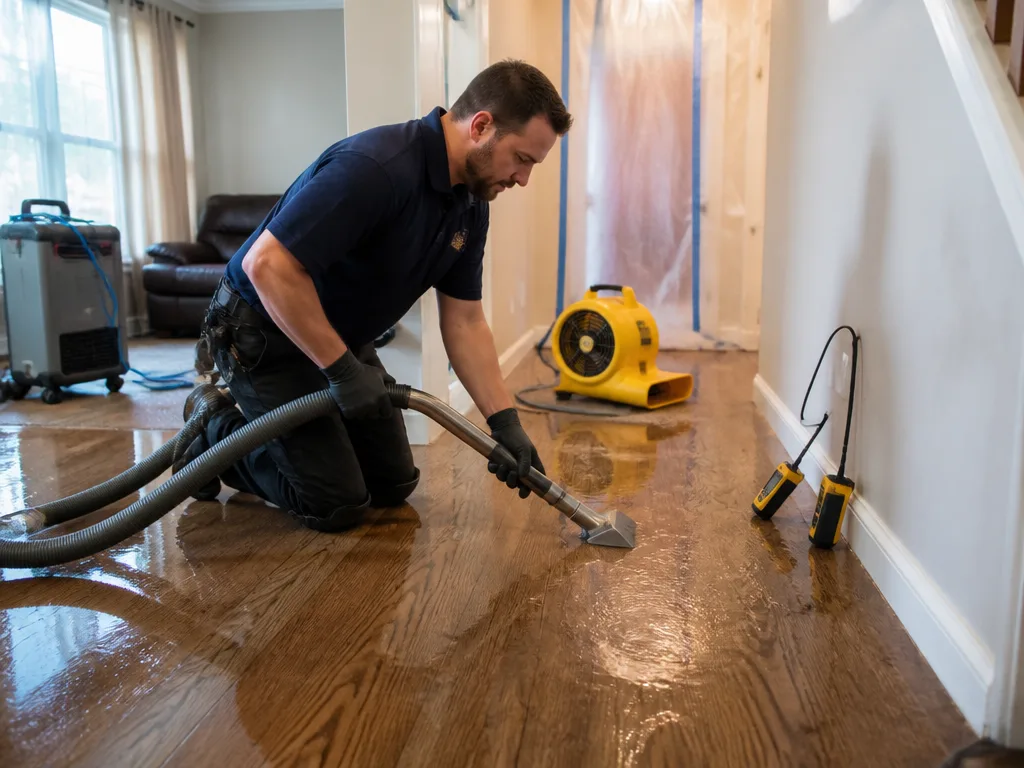
Call us after a burst pipe and we'll pull out the water, dry the floors, and keep mold from settling in.
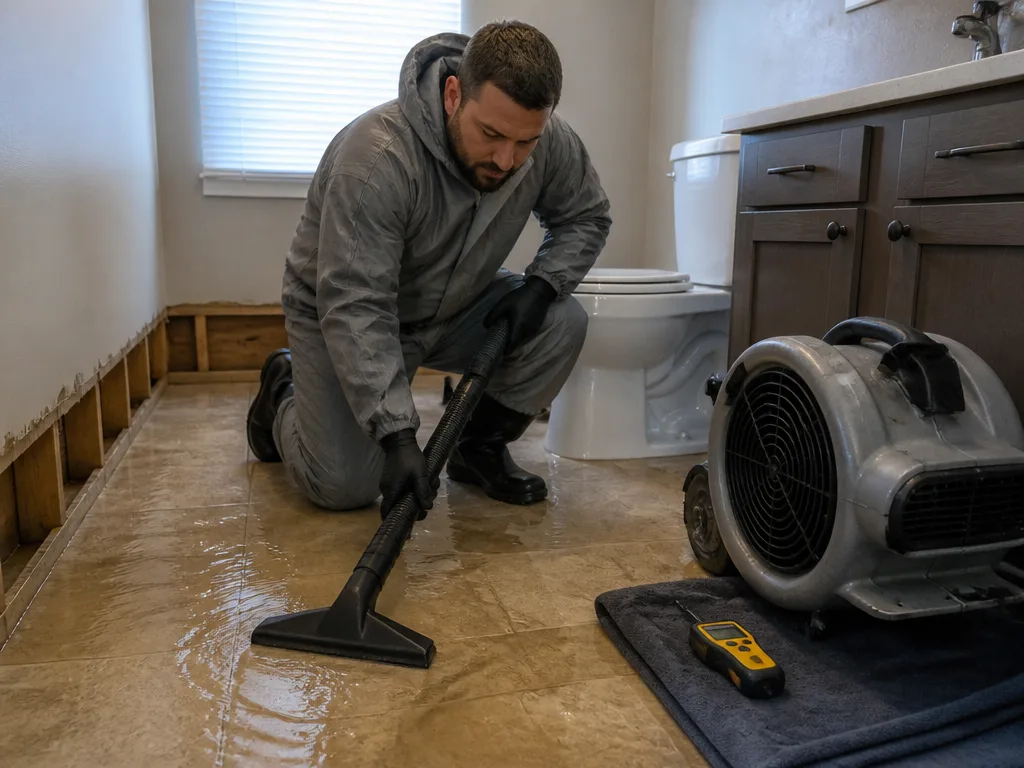
Our crew pulls standing water after a toilet overflow so your subfloor and walls have a chance to dry.
Call now and speak to a real local restoration specialist.